

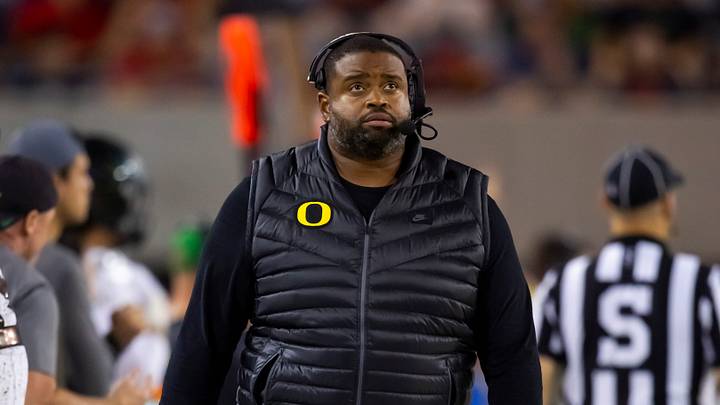
When Alabama hired Adrian Klemm to lead its offensive line back in January, the expectation wasn't simply to bring in another coach to oversee a position group. It was to find someone capable of rebuilding the foundation of the Crimson Tide.
For a program that has built its identity around winning the line of scrimmage, Alabama's struggles up front in 2025 created a bigger question for Kalen DeBoer and offensive coordinator Ryan Grubb:
"Could the Crimson Tide develop the physical identity necessary to compete at the highest level of college football?"
That question is why Alabama made Klemm one of its most important hires of the offseason.
Many will be watching Klemm's progress this fall after seeing the Tide offensive front become the biggest obstacle standing between an explosive offense and a complete offense in 2025. That struggle was reflected in a major way as Alabama failed to reach its full potential and sank to one of its lowest rushing outputs in program history, averaging 3.4 yards per carry and just 104.1 per game.
Now, Klemm prepares for fall camp in less than a month with the sole responsibility of changing that.
His challenge isn't simply replacing four of five starters. It's about building an offensive line capable of restoring Alabama's ability to control the line of scrimmage in 2026, and for years to come.
Of course, when people first look for improvement this season, sack totals will receive the bulk of the attention. But sacks only tell part of the story.
The true measurement of Klemm's rebuild will come through four categories that reveal whether Alabama has regained its physical identity up front and rebuilt the foundation necessary for the offense to reach its ceiling.
Adrian Klemm must answer these four questions for Alabama's offense line
1.) Yards before contact: Can Klemm create running lanes?
The first category that will define Klemm's rebuild is whether Alabama can create more opportunities before defenders reach the ball carrier.
In 2025, the Crimson Tide averaged just 1.6 yards before contact per rushing attempt, a number that exposed one of the biggest issues under former offensive line coach Chris Kapilovic. Too often, running backs were forced to create yards after contact just to keep plays alive because the unit struggled to consistently generate movement at the point of attack.
That's not a sustainable formula.
For Klemm, improving Alabama's yards before contact will be one of the clearest indicators that the offensive line is trending in the right direction. It would show the Crimson Tide are winning the first battle up front, allowing the entire offense to operate with balance again.
2.) Stuff Rate: Can Klemm eliminate negative plays?
The second category that will define Klemm's rebuild is whether Alabama can stop defenses from winning before the play even happens.
Stuff rate measures the percentage of rushing attempts that are stopped at or behind the line of scrimmage, and in 2025, it was one of the biggest indicators of Alabama's struggles up front.
The Crimson Tide posted a 16.5% stuff rate, ranking 109th nationally. This struggle showed how frequently opposing defenses were able to disrupt the rushing attack before it had a chance to develop. Improving this number will be about consistency. The offensive line doesn't need every snap to become an explosive play. It needs to prevent defenses from consistently cheating pre-snap.
For Klemm, reducing Alabama's stuff rate under his watch is key. Doing so would make DeBoer and Grubb's jobs a lot easier and give the Crimson Tide a better chance to control games against elite competition.
3.) Short-Yardage Conversion Rate: Can Klemm make Alabama physical again?
The third category may be the clearest test of whether Alabama has regained its identity in the trenches: How does Klemm's unit hold up in short-yard situations?
In 2025, Alabama's conversion rate fell to 46.7%, a steep drop from their nearly 80% success rate decline from 2024. That drop represented more than just a statistical fall off.
It represents a team that struggled to consistently impose its will to gain one yard when everyone in the stadium knows exactly what's coming.
Third-and-one, fourth-and-one, goal-line situations, and late game possessions.
Those moments separate good offensive lines from great ones. This is why improving Alabama's short-yardage conversion rate will be crucial for Klemm in reinstalling the Crimson Tide's physical edge.
4.) Pressure Rate Allowed: Can Klemm protect the quarterback?
While the rushing attack will receive much of the attention, Klemm's rebuild will also be measured by how effectively Alabama protects its quarterback.
Sack totals will naturally receive the most attention, but pressure rate allowed tells a bigger story. Pressure rate reveals whether the offensive line is consistently allowing defenders to disrupt the quarterback before the play has a chance to develop.
In 2025, Alabama gave up 32 sacks while allowing 183 quarterback pressures, ranking last in the SEC. Ty Simpson was frequently pressured, facing an average up to 49 total defensive pressures against top conference defenses, including a recorded 16.3% pressure-to-sack rate.
That will be especially important for Alabama entering a new quarterback era. Whether it's Keelon Russell or Austin Mack, the Crimson Tide will need stability from Klemm's unit.
For Klemm, the goal is not simply reducing Alabama's sack total. It's building a unit capable of giving the quarterback the time and confidence needed to lead the offense.
All in all, expect the statistics on Alabama's offensive line to look in 2026, but the most important question will remain the same: Has Klemm restored Alabama's physical identity? Those four numbers will provide the clearest answer, revealing if the Tide have rebuilt the foundation necessary to compete for an SEC championship and earn its way back to the College Football Playoff.
 Add us as a preferred source on Google