

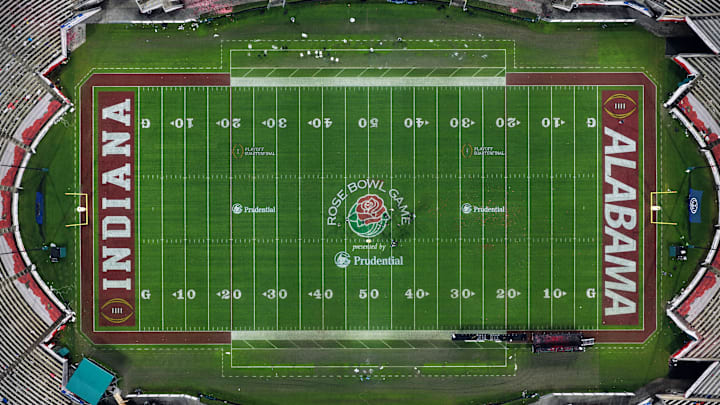
Not just in the sports world, recency bias rules. Respect for history is not dead, but anything that happened much more than a decade ago is mostly ignored. That includes some Alabama Football national championships.
A month after Indiana dominated Alabama in the Rose Bowl, College Football News (CFN) gave history some attention. CFN ranked college football's true Blue Bloods. The Hoosiers did not make the cut. The Crimson Tide not only made the Blue Blood Top 25. The Alabama Crimson Tide was ranked No. 1.
Alabama Football No. 1
The CFN analysis was simple. Only 10-win seasons and undisputed national championships were counted. Going back to the 1920 season, the Crimson Tide has produced 45 10-win seasons. In a slightly shorter span, Alabama was credited with 15 national championships.
The other top 10 Blue Bloods are Oklahoma (43 10-win seasons and seven national championships), Ohio State (35 and seven), Michigan, going back to 1898 (32 and 10), Georgia (30 and three), USC (28 and nine), Nebraska (28 and five), Penn State and Texas (27 and four), and Florida State (26 and three). There are five more SEC programs in the top 25: Tennessee (21 and two), LSU (18 and five), Florida (16 and three), Auburn 14 and two), and Texas A&M (13 and zero).
There is a different perspective, and fairly it deserves not to be labeled as recency bias. Michael Germanese, writing for Mike Farrell Sports, describes the current college football era with the term, Green Bloods. Green Bloods are "programs that have vast financial resources with alumni who prefer wins on the field rather than their name on a building." Indiana is the current No. 1 Green Blood.
Germanese claims the college football Blue Blood era is no more. "It’s no longer the teams with tradition, reputation and historical dominance that win. Now the team with massive alumni and financial resources are taking control of the sport."
There is more nuance than Germanese claims. Texas is an exception as both a Blue Blood, with the financial advantages of a Green Blood. Akin to diminishing returns, donor fatigue will likely occur when throwing money at championships fails for most programs. With no championship payoff, a bright green Green Blood can fade quickly.
 Add us as a preferred source on Google