

College Football has always been about talent, but it has never been only about talent. The best programs, the ones that dominate, have always been built on leadership. Not the flashy kind that shows up on highlight reels, but the uncomfortable, behind-the-scenes kind that sets standards when no one is watching.
That is why the transfer portal has sparked a conversation that goes beyond wins and losses. As rosters turn over faster than ever, it is fair to ask: "Is college football losing something when leadership no longer has time to grow?"
For decades, leadership followed a familiar arc. Young players learned. Older players taught. Juniors and seniors became extensions of the coaching staff. Accountability came from teammates who had lived through the same grind: offseason workouts, depth chart battles, and pressure-packed Saturdays. Time mattered.
Did the portal erase leadership? Or did it compress it? Players now arrive expected to contribute immediately. Especially if they have a large price tag that comes along with them. Sometimes they do. Sometimes they leave just as quickly. That creates a challenge: leadership usually requires shared experience, and shared experience requires time.
This isn't a knock on transfers or the portal. Many are mature, professional, and highly motivated. But leading a locker room is different from producing on the field. Leadership is built through trust, and trust doesn't download instantly with a playbook.
The unintended losses for college footbal lin the Transfer Portal era
What Leadership Used to Look Like
Historically, leadership meant players waiting their turn, internal accountability before external consequences, and teammates policing standards, not just the coaches. Coaches across the sport, especially the successful ones, have long emphasized that teams are player-led. Practices don't survive on speeches. Cultures survive because leaders enforce expectations when coaches aren't present. When rosters are constantly changing, that responsibility becomes harder to assign and pass along. It would be like if in your work, if 30% of your employees or management were leaving every single year.
How Alabama Fits Into the Conversation
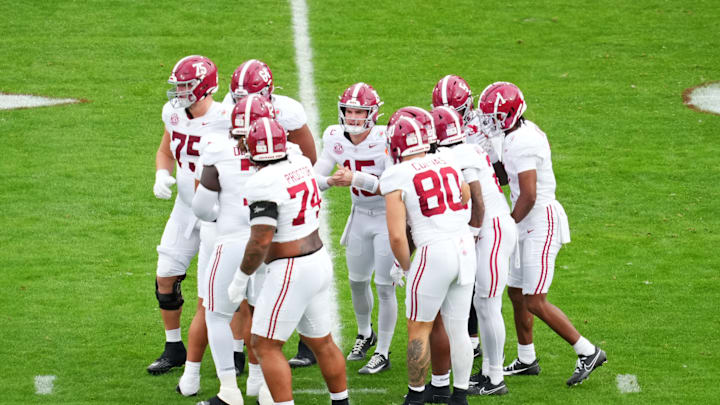
Alabama is a useful case study because leadership has always been central to its success. Under Nick Saban, leadership wasn't optional. It was taught, demanded, and reinforced daily. Players were expected to lead by example, prepare professionally, and hold teammates accountable regardless of star status. Saban often emphasized that discipline and consistency win before talent does. His teams didn't rely on one voice, but on a locker room full of voices. That model thrived on continuity.
In the portal era, Alabama, like everyone else, has benefited from transfers. They have also had to adapt. Leadership now comes from a mix of long-term program guys and newcomers who must learn expectations quickly and live up to them immediately. The challenge isn't just Alabama attracting top talent, but can it attract leaders? Can they still develop leadership in the "wild west" of college sports, where players are moving around at the end of every year? Can they develop some cultural anchors for their program?
Is Leadership Disappearing or Just Changing?
The truth is probably somewhere in the middle. Any job place, team, or organization that suffers from high turnover is going to have to have strong leadership to maintain it from falling apart. Leadership isn't gone from college football; it is evolving. Programs are searching for older and experienced players who buy into the program fast, lead with their seniority, and carry on the culture. It is harder in the transfer portal era with the constant movement, but not impossible. Indiana Football is a great example of the cultural anchors needed with many of Cignetti's JMU transfers. The average age of the team is also higher than most in college football, which can lend to maturity and leadership among the younger players. They are achieving success in a sport that no longer rewards patience the way it did.
And that might be the real offseason debate with the way the transfer portal is set up. Can programs build leaders and a culture in a system that rewards movement and individualism?
 Add us as a preferred source on Google