

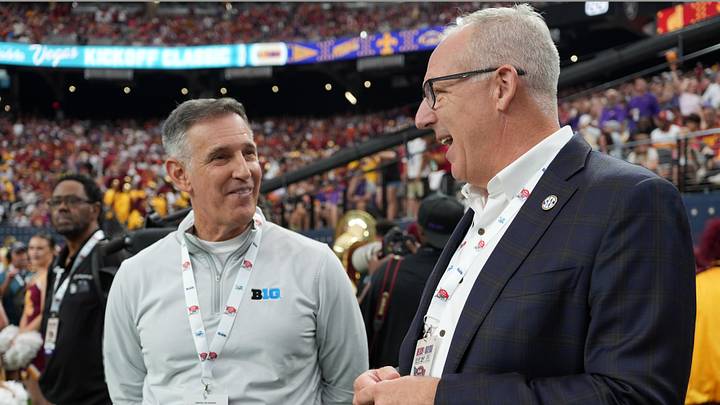
For several years, SEC Commissioner Greg Sankey has been known as the most powerful person in college sports. In recent months, the word demon has often been given to Sankey because of his obstruction of a 24-team CFB Playoff. It is used in the context of Sankey not doing what is best for college football.
So what is the SEC's powerful demon to do? Exactly what he is employed to do: further the best interest of the Southeastern Conference.
It would be grand if the SE's best interests were also in the best interests of all college sports. Grand, yes; possible, no, with the one overwhelming reason being self-interest. Coaches, athletic directors, and conference commissioners supporting a move to a 24-team playoff field are driven by self-interest. Why shouldn't Greg Sankey be as well?
Sankey works with athletic directors and coaches. He does not work for them. His bosses are the 16 SEC presidents and chancellors. Whether they like it or not, money must drive their decisions.
It takes more than money to win championships. But money is becoming the biggest difference maker. In college football, no conference has the money-making ingredients equal to the SEC.
In a January piece by Football Scoop, Zach Barnett wrote: "Nothing can touch the NFL as a television product. But it's becoming increasingly clear by the year that nothing else can touch college football."
Most Viewed 2025-2026 College Football Games
The same story provided the 100 college football games with the most viewers in the 2025 season. The SEC was by far the leader. In the top 100 most-viewed games, if viewership in SEC vs. Big Ten games is split 50% viewers assigned to each conference, SEC teams had around $425 million in viewership compared to around $275 million for Big Ten teams.
College football's Power Two dominated, with 67 of the 100 games being SEC or Big Ten regular-season games. In the top 50 most-viewed regular-season games, the separation between the SEC and the Big Ten was stunning. Twenty-eight of the 50 games had at least one SEC team, with most being SEC vs. SEC games. The Big Ten had just six games in the top 50. Two more in the top 50 games were SEC. vs. Big Ten contests.
If Greg Sankey were not fighting to maintain the value of regular-season games, he would be guilty of gross negligence. Sankey is correct to warn that a "tipping point" is likely when regular-season games, especially November games, matter less. Games that matter less might decline in viewership. With 24 Playoff teams, conference championship games go away. Sankey is concerned that, with no SEC Championship Game and limited additional revenue from more playoff games, the result could be a net financial loss to the SEC. Future SEC media deals might also shrink due to fewer meaningful regular-season games.
The demon in the debate is not Greg Sankey. It is a rush to judgment that presumes more is always better than less.
 Add us as a preferred source on Google