

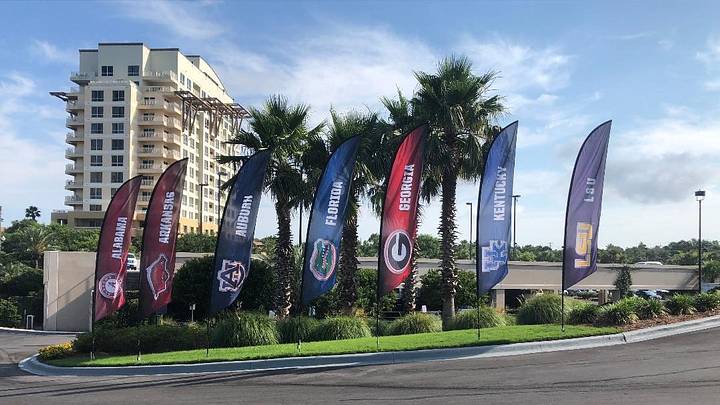
Following the SEC's Spring Meeting, it is clear that the conference is not banking on the Protect College Sports Act. Few experts give the federal legislation a good chance of becoming law. It could be many months before votes are scheduled, if it gets that far.
Ross Dellenger's exhaustive reporting explains why the SEC and the Big Ten are "uncomfortable" with the act. According to one SEC source, the proposed legislation "targets" the SEC and the B1G. Specifically, it "bars the SEC and Big Ten from expanding beyond their current membership, prevents them from merging to form the long-discussed 'super league,' and includes a concept to permit conferences to pool their media rights."
The SEC wants some of the changes in the proposed legislation, including limiting transfers and eligibility, but there is zero chance the SEC will ever agree to pooling media rights.
SEC presidents and chancellors went into the Spring Meeting primed for conversations about self-governance. Before the new federal bill was introduced, it was estimated that a fast track to implementing self-governance would take many months. Now, there is "urgency" according to Tennessee Chancellor Donde Plowman. Mississippi State President Mark Keenum expects that Greg Sankey will present recommendations by mid-summer.
Writing for The Athletic, Seth Emerson defined how monumental an SEC breakaway could be: " It sounds wild. Its own rules. Its own playoff. Its own little universe, as one athletic director put it. The SEC’s breaking away from the rest of college sports, forming its own fiefdom, seems so outlandish that everyone here at the SEC meetings would be shooting it down. and yet they aren't."
The SEC's possible boldness will have plenty of detractors. How it will play out is impossible to guess. In the near term, a separate competition structure is not expected. Down the line, a separate playoff for SEC teams is possible.
Also possible is collective bargaining and classifying players as employees. Past opposition to both from SEC leaders is quickly fading.
Best for the Alabama Crimson Tide?
The current, too-ruleless environment is not sustainable for college sports. Perhaps a few dozen college football programs can survive it, and an even smaller number of men's basketball programs. Alabama has one of the football programs. The Crimson Tide may not have one of the sustainable men's basketball programs. Alabama AD Greg Byrne has hinted that it is nearly impossible for Alabama to have both.
There are SEC athletic departments with greater financial resources than Alabama. In the current environment, those programs have more probable paths to championships. A new structure with more controls could level the playing field for the Alabama Crimson Tide.
 Add us as a preferred source on Google