

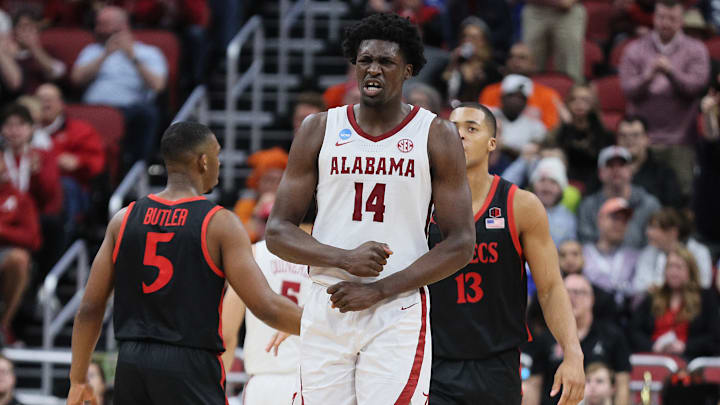
On Tuesday, a report surfaced from AL.com that former Alabama center Charles Bediako was suing the NCAA for eligibility to play in the second half of the Crimson Tide's season three years after he left Tuscaloosa to enter the NBA Draft.
The NCAA denied Bediako's request for eligibility, and now the case will be settled in court. Perhaps soon. The NCAA's grounds for denying Bediako's waiver are mainly due to the fact that he signed multiple NBA contracts - Two-Way and Exhibit 10 deals - and they've yet to grant eligibility to anyone who has done so.
So what?
The NCAA opened Pandora's box and is now desperately trying to avoid letting everything escape. They've drawn an arbitrary line in the sand that almost certainly won't hold up in court.
The NCAA has granted numerous former professional basketball players eligibility in college. Somewhere along the way, they decided that playing professionally in Europe is different than playing professionally in the NBA. Well, except for former G-League players, many of whom have also seen eligibility waivers granted.
Because the G-League is still professional basketball. It's the NBA's developmental league, akin to the minor leagues in baseball. Bediako has only played in the G-League, never logging a real NBA minute. But he's not eligible because he signed a professional contract? I think the NCAA will find out quickly that a judge doesn't view things as arbitrarily as they do.
They opened the door for this, and Nate Oats, Alabama, and Charles Bediako are just playing by the new rules.
Charles Bediako's eligibility case is pretty clear
Bediako's case is clear. He left school with two years of eligibility remaining, mainly because NIL rules at the time made it difficult to next-to-impossible for him to earn NIL due to his citizenship status. His lawyer is making the argument that had NIL been what it is now, Bediako would have likely stayed in college longer.
And this is his last chance of playing college basketball. Once you start playing college sports, you have five years to play four. This is the fifth year on his eligibility clock. That's why there's such a sense of urgency from Bediako and his attorney to push this in court.
Is this kind of thing good for college basketball? Of course not. But neither was the NCAA allowing European professionals to come play in college, either. Or granting eligibility to the 31st overall pick in the 2023 NBA Draft.
Amateur athletics no longer exist at the collegiate level. If you want to watch amateurs play, perhaps find your local high school game. This is professional sports now. It's what everyone seemingly wanted.
So don't cry now when schools take advantage of the new landscape.
 Add us as a preferred source on Google