

Every football season has its X-factors, and with Alabama embracing youth from within in 2026, the Transfer Portal might be an element that decides everything. This is exactly why I feel the Crimson Tide can't afford to strike out on these three particular positions listed below this fall.
1.) WR Noah Rogers - NC State
After Alabama saw two productive wide receivers in Germie Bernard and Isaiah Horton walk out the door this offseason, it's imperative that the Crimson Tide hit big on the addition of Noah Rogers. I say this because he represents more than just a body in the receiver room — he fills a tangible need with real upside and positional value that could swing key parts of the Tide’s 2026 offense. At 6-foot-2, 205 pounds, Rodgers gives Kalen DeBoer and second-year offensive coordinator Ryan Grubb a proven, experienced pass-catcher with prototypical size for an outside receiver who can win contested throws, challenge secondary defenders vertically, and be a complement alongside returning starters Ryan Williams, Lotzeir Brooks, and even Rico Scott.
Rogers showed this when he stepped into a meaningful role at NC State over the past two seasons, totaling 68 receptions for 919 yards and three touchdowns and averaging over 13 yards per catch. He can move the chains and stretch the field.
This ability will be paramount as Alabama ushers in another quarterback under center in either Austin Mack or Keelon Russell. It also takes the pressure off of younger, talented receivers like Cederian Morgan and Derek Meadows from having to be rushed into No.1 roles inside the Crimson Tide offense that could spearhead their individual developmental processes. Lastly, Rogers has two seasons of remaining eligibility, which gives him the opportunity to develop similarly to how Bernard did in his two seasons in Tuscaloosa.
2.) OL Kaeden Strayhorn - Michigan
While this addition might not be as flashy as the Rogers pickup, it’s arguably just as important, many may agree. Alabama has to cash in on Strayhorn because he represents the type of versatile, high-floor contributor this offense can’t afford to miss on, with the Tide offensive line room skewing young and roles still being defined. That need is even more acute given the massive turnover along the interior of Alabama’s offensive front — with multiple guards and centers departing via the NFL Draft and transfer portal, the Tide have been forced to retool the core of their line almost from scratch.
Adding a transfer like the 6-foot-3, 318-pounder gives Alabama a player with scheme versatility in a spot where there otherwise isn’t a lot of proven depth. If he can step in and provide stability up front, it not only helps the run game and pass protection but also helps the offense stay on schedule and reduces breakdowns in protection. It also eases the burden on Alabama’s young quarterbacks and skill-position talent, allowing them to operate without constantly having to compensate for leaky interior protection.
This all marries together because in DeBoer’s offense, timing and rhythm are non-negotiable, and that starts with a clean pocket and reliable push up front. Strayhorn doesn’t have to be a future All-American to justify his importance — he simply has to be steady. With him having four seasons of eligibility, if Alabama can cash in on that steadiness, it creates a trickle-down effect that raises the floor of the entire unit. But if he doesn’t hit, the Tide risks learning on the fly in the SEC trenches, where inexperience is exposed quickly and often.
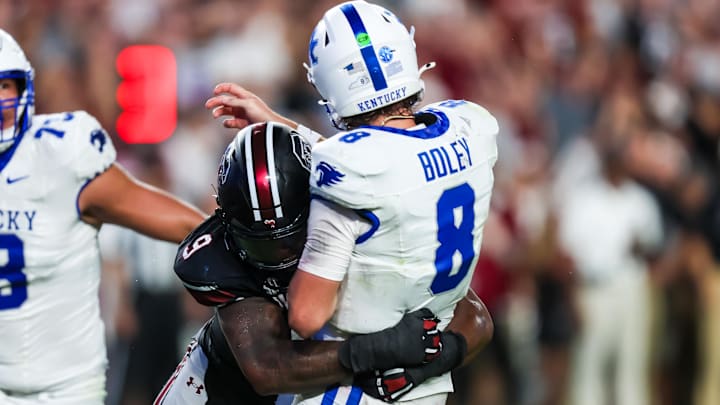
3.) DE Desmond Umeozulu - South Carolina
If Umeozulu hits it off big in Tuscaloosa, Alabama’s entire defensive structure stabilizes. I say this because at 6-foot-6, 255 pounds, his emergence would allow third-year defensive coordinator Kane Wommack and the Tide front to consistently rush four and still affect the quarterback, which is the foundation of this defensive system. That kind of pressure keeps the back seven intact, limits the need for exotic blitz packages, and reduces stress on the Crimson Tide secondary.
With coverage sound and eyes forward, explosive plays are naturally minimized rather than chased. Just as important, Umeozulu’s presence allows Alabama to rotate along the defensive front without a drop-off, keeping bodies fresh late into games when SEC offenses are trying to speed things up and force mistakes. If he becomes that guy, Alabama’s defense shifts from reactive to controlled, and that margin is often the difference between winning tight games and letting them slip.
 Add us as a preferred source on Google